
Service
Property Strip-Outsin ManchesterReady For The Trades
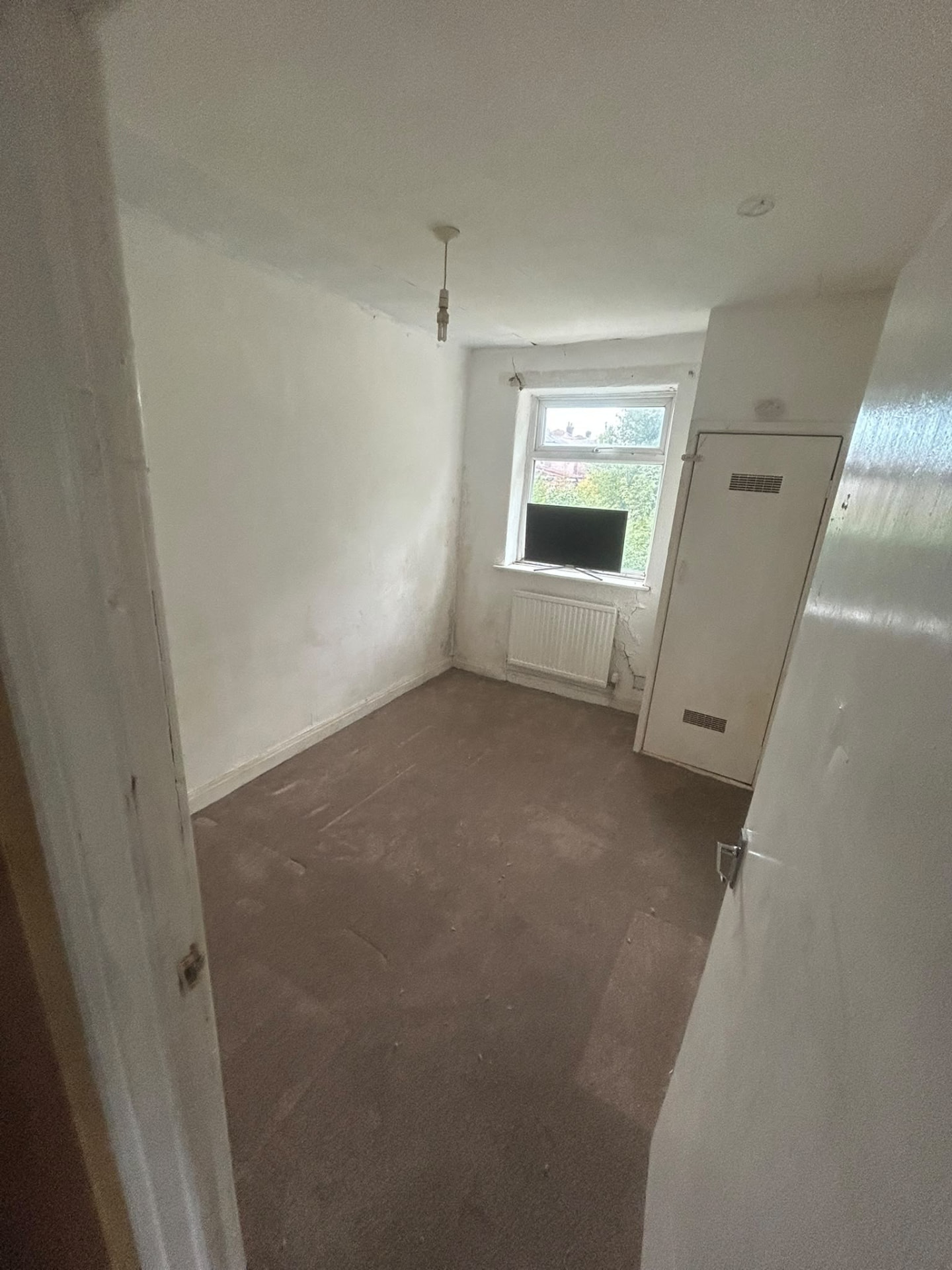
Kitchens, bathrooms, flooring and fixtures taken out cleanly and carted away in the same visit, so your fitters walk into a bare, swept space instead of a pile of someone else's debris.
Registered waste carrier · Public liability insured · Out-of-hours slots available
Registered waste carrier
Environment Agency registered; waste transfer notes on request
Public liability insured
Fisher Group Services Ltd, company no. 17117250
4 years trading
In the waste trade since the age of 15
5.0★ on Google
Rated by customers across Greater Manchester
Open 7am–10pm, 7 days
Same-day and next-day slots available
Overview
What property strip-outs covers in Manchester
What the service is
A strip-out, often called a soft strip, is the removal of everything non-structural from a space: kitchen units and worktops, bathroom suites and tiling, carpets, laminate, floorboards, ceilings, partitions, doors, radiators, fitted wardrobes, shopfittings and cabling. We take it out and take it away in the same operation, so demolition and disposal are not two separate bills.
Who it's for
Homeowners refurbishing, landlords upgrading a tired let, builders and fit-out contractors who want the strip done before their trades arrive, kitchen and bathroom installers who would rather not spend day one lifting a bathroom into a van, and commercial tenants handing a unit back in bare shell condition.
When it's needed
Before any refurbishment. A refit slips the moment the old kitchen is still in the room on installation day. Getting the strip done ahead of the trades, with the waste gone rather than stacked in the garden, is usually the difference between a project running to plan and one running over.
Why professional help matters
Strip-outs generate awkward, heavy, mixed waste, tiles, plaster, timber, sanitaryware, metal, that most refit teams are not licensed to move and skips cannot always hold. We are a registered waste carrier, insured, and used to working inside occupied buildings, so the debris leaves the site legally and the building is not damaged getting it out.
Leave it and it costs more
What happens if it’s left
A strip-out that is left half-done or left in the garden costs more than the strip itself, because it stops every trade behind it.
- Installers arrive to a room that is not ready and charge for the wasted day, or reschedule you a fortnight down the line.
- Debris left on site becomes a trip and injury hazard, and an insurance question if anyone is hurt on a domestic project.
- Water and waste left connected on a pulled-out kitchen or bathroom leads to leaks, damaged ceilings and a much bigger repair bill.
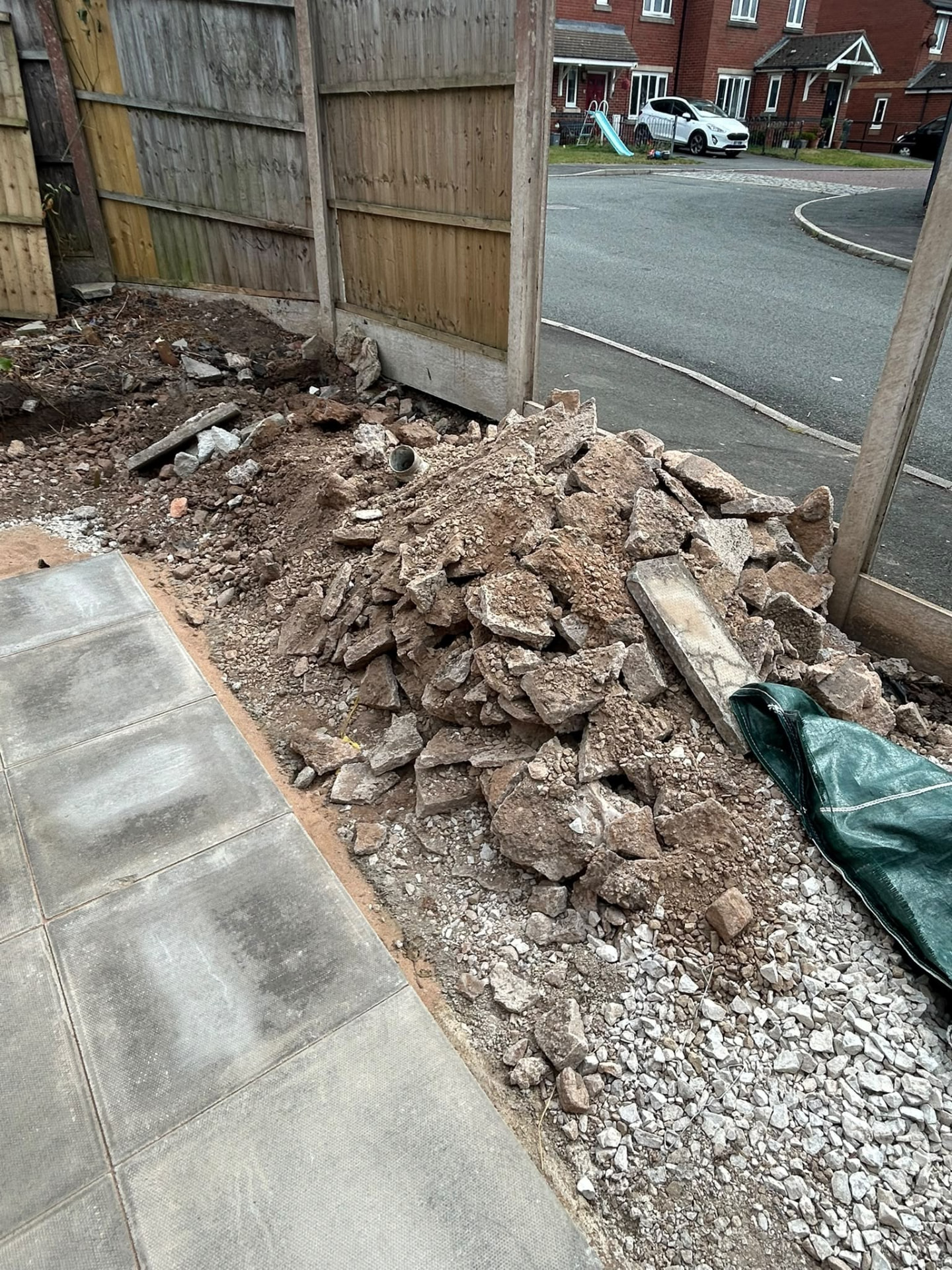
- Rubble and plaster stored in a garden or hallway crushes flooring, stains driveways and irritates neighbours into complaints.
- Mixed strip-out waste tipped by an unlicensed carrier comes back to the property owner as a fly-tipping liability.
Common mistakes we see
- Assuming the fitter's price includes taking the old kitchen or bathroom away; it very often does not.
- Hiring a skip for a bathroom strip and discovering sanitaryware and plasterboard limits.
- Ripping out flooring without checking what is underneath, then damaging joists or boards that were reusable.
- Stripping before the isolations are done, so a live circuit or a live feed turns a tidy job into an emergency.
Our process
How the job runs, start to finish
- 1
Call or send photos
Tell us the postcode and what needs shifting, or send a couple of photographs. We work out the volume and access from that: no waiting on a surveyor.
- 2
Fixed price agreed
You get one clear figure before anything is booked, based on volume, weight and access. It does not change unless you add to the job.
- 3
Time slot confirmed
We confirm a day and a time window, including evenings and weekends, and ring you before we set off so you are not waiting in.
- 4
Cleared and swept
Our crew does all the carrying and loading, segregates timber and metal for recycling, and brushes the area through before we leave.
- 5
Legally disposed, documented
The load goes to a licensed commercial waste facility. Pay by card, cash or transfer, and ask for a waste transfer note for your records.
What you get
Why customers book property strip-outs with Fisher
Strip and disposal in one price
Removal, loading, transport and legal disposal are quoted as one fixed figure, so there is no second invoice for taking the debris away.
Your programme protected
We can work evenings and weekends between trades, which keeps a refurbishment moving instead of losing days to sequencing.
Careful in occupied buildings
Where a property is lived in or a neighbouring flat is occupied, we protect routes, keep dust and noise contained to the working area and take loads out cleanly.
Materials segregated
Timber is recycled, metal (radiators, pipework, sinks, units with metal carcassing) is separated out, and only the genuinely mixed remainder goes to the licensed facility.
Fewer contractors to manage
One crew, one number, one invoice for strip and clearance rather than a labourer, a skip company and a waste carrier all needing coordinating.
Handed over ready to work
The space is left swept and clear, so the next trade can start measuring and fitting on arrival rather than clearing up first.
In detail
Property Strip-Outs in Manchester: the detail that matters
What a strip-out typically covers
Non-structural removal, taken back to whatever level of shell you need.
- Kitchen units, worktops, splashbacks, appliances and extractors
- Bathroom suites, showers, screens, wall and floor tiling
- Carpets, underlay, laminate, vinyl, tile and timber flooring
- Internal doors, frames, skirtings, fitted wardrobes and shelving
- Suspended ceilings, stud partitions and plasterboard
- Radiators, redundant pipework, cabling, shopfittings and signage
Methods and materials
Sequence matters. Services are isolated first, soft materials come out before hard, and heavy fractions such as tiles, plaster and rubble are bagged in manageable weights rather than loose-loaded, which protects both the floors and the crew. Timber-based units are broken down flat so a van load holds far more than it would with intact carcasses, which directly reduces the number of loads you pay for.
Domestic refits versus commercial fit-outs
A domestic strip is usually one or two rooms, worked around a family living in the house, with care taken over stairs, carpets on the routes and parking. A commercial strip-out is about access windows: loading bays, service lifts, out-of-hours working and building management sign-off. We handle both, and for commercial work we can invoice per site with waste transfer documentation attached.
What we do not do
We are a soft strip and clearance crew, not a demolition contractor. We do not remove structural walls, and we do not touch asbestos; if suspected asbestos-containing materials are found in a ceiling, floor tile, artex or a garage roof, we stop and tell you so a licensed specialist can take it from there. Being straight about that is safer for everyone and keeps your project legally clean.
Disposal and paperwork
Strip-out waste goes to a licensed commercial waste facility, with timber and metal recycled where they can be separated. Waste transfer notes are issued on request; important for contractors who need to evidence the waste chain to a client or a principal contractor.
Common questions
Property Strip-Outs questions, answered straight
How much does a strip-out cost in Manchester?
It is priced on the volume and weight of what comes out plus the labour to remove it. A full van load of roughly 12–14 cubic yards is £550 and a typical single kitchen or bathroom strip is well under a full load. You get a fixed price before we start.
How long does a kitchen or bathroom strip-out take?
A standard domestic kitchen or bathroom is usually a few hours to most of a day, including loading and removal. Tiled walls and floors add time because of the weight and the bagging.
Do you take the waste away as well?
Yes: that is the point of using us. The strip and the disposal are one job, one crew and one price.
Can you work around my other trades?
Yes. We work 7am to 10pm, seven days a week, so strips can be slotted in the evening or at a weekend to keep a refurbishment programme on track.
Do you disconnect appliances, water and electrics?
We can disconnect straightforward domestic appliances where isolation is safe and accessible. Anything requiring a qualified electrician or gas engineer must be isolated by that trade first; tell us when you book and we will sequence around it.
What about asbestos?
We do not remove asbestos. If we suspect it, we stop work in that area and tell you immediately so a licensed asbestos contractor can deal with it safely.
Can you strip a commercial unit back to shell?
Yes: shopfittings, partitions, suspended ceilings, flooring and signage removed, with out-of-hours access if the building requires it.
Will my floors and walls be protected?
On routes we are carrying through, yes. We plan the exit route first and take reasonable protection measures so the parts of the property you are keeping do not get damaged.
Do you provide waste transfer notes?
Yes, on request. We are a registered waste carrier and dispose through a licensed commercial waste facility.
Is it cheaper than hiring a skip and a labourer?
In most cases yes, because you are paying for one crew that does the removal, the loading and the legal disposal, with no permit, no skip hire period and no leftover debris.
Where we work & what else we clear
We cover Manchester and the surrounding boroughs within roughly a 20–30 mile radius. See our homepage for pricing at a glance, browse all our services, or get in touch for a fixed price.
Related services
Property Strip-Outs by area
Book your property strip-outs in Manchester today
Tell us what needs shifting and you'll get a fixed price before anything moves: from £60 a single item to £550 a full van load. Registered waste carrier, insured, working 7am to 10pm, seven days a week.