Service
Fly-Tip Clearancein ManchesterRemoved Fast
Dumped waste cleared from your land, alleyway, car park or communal area quickly and legally, before it multiplies and before the enforcement notice lands on you.
Rapid response, 7am–10pm · Registered waste carrier · Photographs and paperwork on request
Registered waste carrier
Environment Agency registered; waste transfer notes on request
Public liability insured
Fisher Group Services Ltd, company no. 17117250
4 years trading
In the waste trade since the age of 15
5.0★ on Google
Rated by customers across Greater Manchester
Open 7am–10pm, 7 days
Same-day and next-day slots available
Overview
What fly-tip clearance covers in Manchester
What the service is
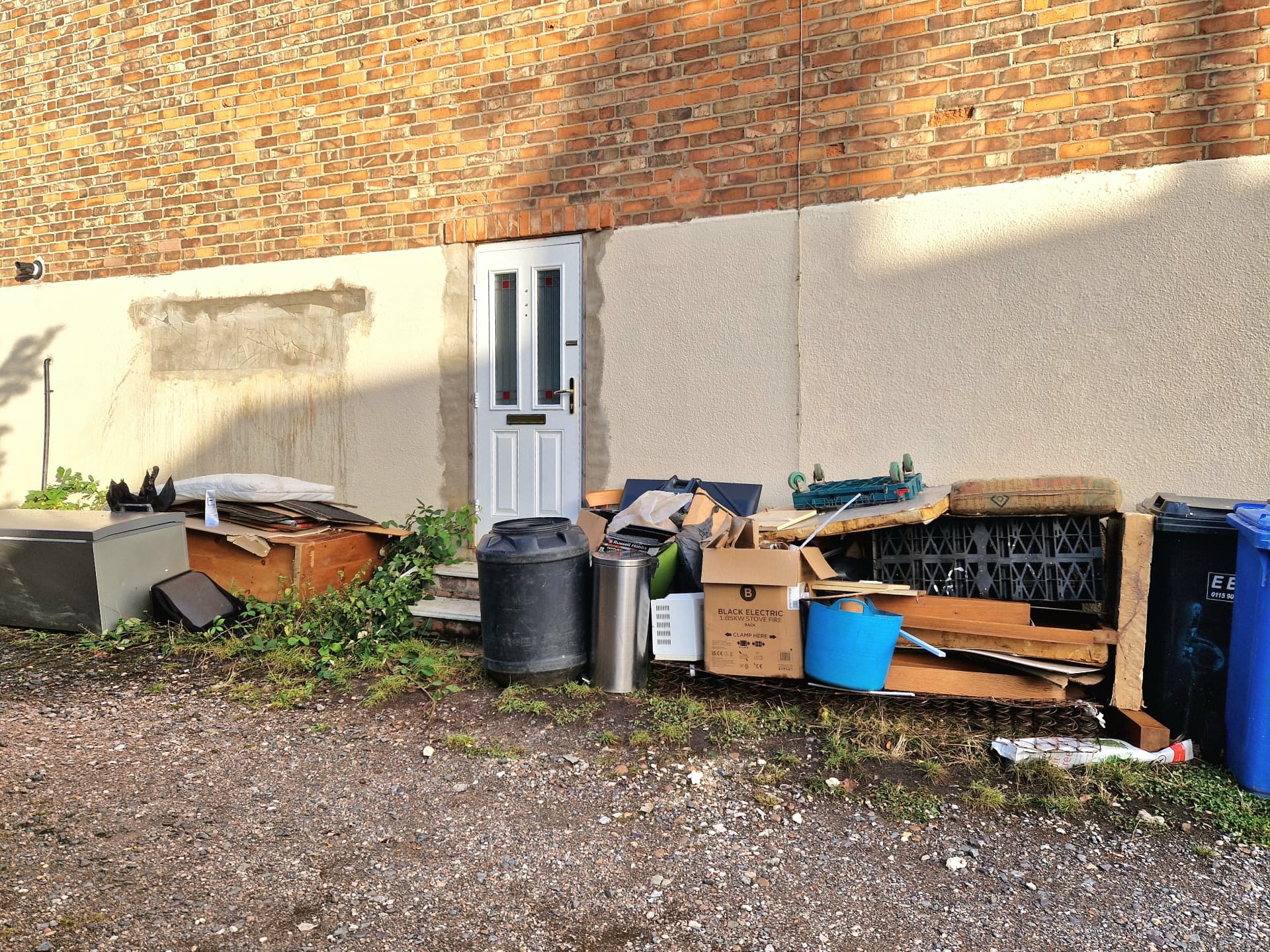
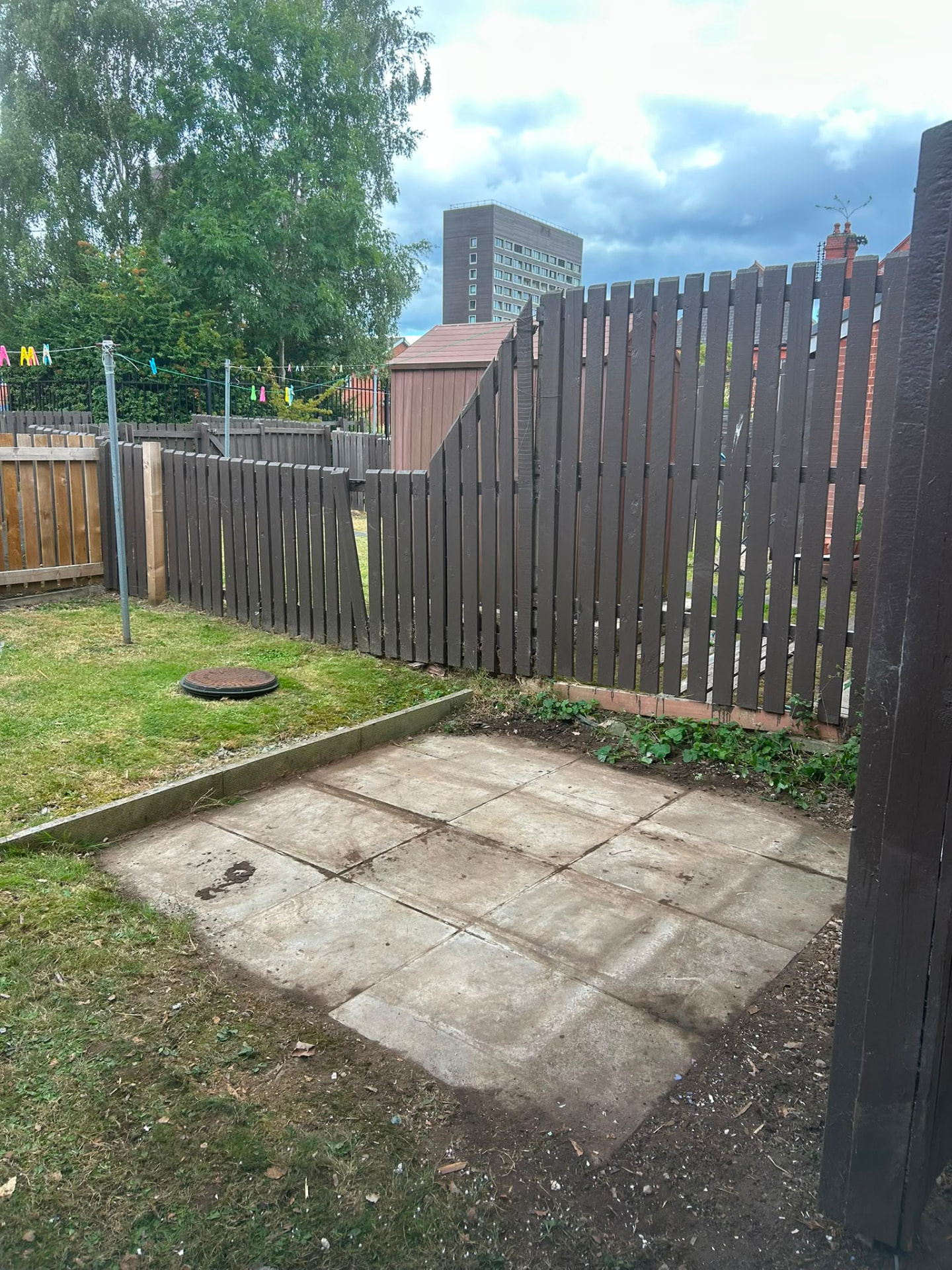
Fly-tip clearance is the rapid removal of waste dumped illegally on your property: bagged rubbish, mattresses, furniture, building debris, tyres, garden waste and mixed loads left by someone else. We clear it, sweep the area and dispose of it legally, with photographs and paperwork available for your records or your insurer.
Who it's for
Landowners, landlords, managing agents, housing associations, business parks, retail and car park operators, farmers and community groups. Anyone who has found somebody else's waste on their land and is now legally responsible for it.
When it's needed
As fast as possible. Fly-tipping is cumulative: a dumped sofa becomes a dumped sofa plus ten bin bags within a week, because a site that already has waste on it reads as a place where dumping is tolerated.
Why professional help matters
Under the duty of care, waste on private land generally becomes the landowner's problem to clear, and the council can serve notice requiring it. Clearing it with a registered waste carrier means it is removed properly and documented; clearing it with an unlicensed van risks the same waste reappearing somewhere else with your paperwork inside it.
Leave it and it costs more
What happens if it’s left
Fly-tipping is the one waste problem that actively grows if you leave it, and the cost of leaving it is not just the clearance.
- One tip attracts more. Sites with visible waste get repeatedly targeted, and the clearance cost multiplies with each visit.
- Local authorities can serve notices on landowners requiring removal, with costs and penalties attached.
- Dumped waste often contains hazardous items such as chemicals, sharps and asbestos sheets, which is a serious risk to staff, residents and children.
- Blocked alleys and fire escape routes in tenanted blocks are a life-safety and insurance issue.
- Tipped waste on commercial frontages drives customers away and affects tenant retention in managed estates.
Common mistakes we see
- Moving the waste yourself to another spot; that transfer can itself be an offence.
- Waiting for the council to attend private land, which they often will not do.
- Clearing without photographing first, losing evidence that could identify who dumped it.
- Hiring the cheapest van without a carrier licence and getting the same waste dumped a mile away with your details in it.
Our process
How the job runs, start to finish
- 1
Call or send photos
Tell us the postcode and what needs shifting, or send a couple of photographs. We work out the volume and access from that: no waiting on a surveyor.
- 2
Fixed price agreed
You get one clear figure before anything is booked, based on volume, weight and access. It does not change unless you add to the job.
- 3
Time slot confirmed
We confirm a day and a time window, including evenings and weekends, and ring you before we set off so you are not waiting in.
- 4
Cleared and swept
Our crew does all the carrying and loading, segregates timber and metal for recycling, and brushes the area through before we leave.
- 5
Legally disposed, documented
The load goes to a licensed commercial waste facility. Pay by card, cash or transfer, and ask for a waste transfer note for your records.
What you get
Why customers book fly-tip clearance with Fisher
Fast attendance
We work 7am to 10pm, seven days a week and prioritise fly-tips because delay makes them worse. Same-day and next-day clearances are usually possible across Greater Manchester.
Legal chain of disposal
Everything leaves under our Environment Agency waste carrier registration and goes to a licensed facility, with waste transfer notes issued on request.
Evidence captured
We can photograph the tip before and after clearance, which is what councils, insurers and managing agents ask for.
Mixed loads handled
Fly-tips are never one material. Furniture, bags, rubble, timber and garden waste in the same heap is exactly the load type we deal with daily.
Site left clean, not just cleared
We brush through afterwards. A clean site is far less likely to be tipped on again than one with residual mess.
Repeat and monitored sites
For repeatedly targeted alleys, car parks and estates we can attend on a scheduled basis and invoice per site, which is cheaper than emergency call-outs every time.
In detail
Fly-Tip Clearance in Manchester: the detail that matters
Where we clear fly-tipping
Anywhere in Greater Manchester where waste has been dumped without consent.
- Back alleys, ginnels and rear access roads behind terraces
- Communal bin areas, courtyards and estate grounds
- Private car parks, service yards and loading bays
- Vacant plots, garage blocks, lock-ups and derelict land
- Business park verges, industrial estate edges and gated yards
- Farm gateways, field entrances and rural laybys
What a typical fly-tip contains
Usually a mix: bagged household waste, mattresses, sofas, broken furniture, white goods, building rubble, plasterboard, timber, tyres and green waste, often with loose litter spread around it. Materials are segregated as we load: timber and metal for recycling, the mixed remainder to a licensed facility: so as much as possible is recovered rather than everything going in as one mixed load.
Safety and hazardous items
Because nobody knows what is in a fly-tip until it is opened, we assume the worst and handle it accordingly. If we find asbestos sheeting, drums of chemicals, gas bottles, clinical waste or sharps we do not load them; we isolate the area, tell you immediately and advise on the licensed specialist route. Everything else goes on the van.
Preventing the next tip
Clearance is the fix; deterrence is the saving. Clearing quickly and completely is the single most effective deterrent, because a clean site is a much less attractive target. Beyond that, lighting the area, blocking vehicle access to the dumping point, and running scheduled clearances rather than reactive ones all reduce repeat incidents on the sites we look after.
Private landowners versus managed portfolios
For a homeowner or small landowner this is a one-off rapid clearance with a fixed price. For housing providers, agents and commercial estates it is usually a documented, repeatable service: attendance within an agreed window, before-and-after photographs, per-site invoicing and waste transfer notes for the compliance file.
Common questions
Fly-Tip Clearance questions, answered straight
How fast can you clear a fly-tip?
Often the same day. We work 7am to 10pm seven days a week and treat fly-tips as priority jobs because they grow if they are left.
How much does fly-tip clearance cost?
It is priced by volume, weight and access, from £60 for a small dumped item up to £550 for a full van load of roughly 12–14 cubic yards. A photograph sent over the phone usually gets you an accurate fixed price.
Isn't fly-tipping the council's responsibility?
On public land, generally yes. On private land the landowner is usually responsible for clearing it, which is why most of our fly-tip work is for landlords, agents and businesses.
Should I report it before clearing?
Yes, report it to the council and photograph it first. We can also take before-and-after photographs as part of the clearance for your records.
Can you clear waste with hazardous material in it?
We remove all general and bulky waste. Asbestos, chemicals, gas bottles and clinical waste we do not touch: we identify them, isolate the area and tell you the correct licensed route.
Do you provide paperwork?
Yes. Waste transfer notes are issued on request and invoices can be raised per site, which is what most agents and housing providers need.
Can you attend repeatedly targeted sites on a schedule?
Yes. Scheduled clearances for alleys, estates and car parks are usually cheaper and more effective than reactive emergency call-outs.
Do you work in alleyways with restricted access?
Yes: Manchester ginnels and rear alleys are a large part of this work. We carry out to the nearest legal loading point where a van cannot get in.
Will the area be swept afterwards?
Yes. Loose litter is cleared and the ground brushed, which also makes the spot less likely to be targeted again.
Are you licensed to carry this waste?
Yes. Fisher Group Services Ltd is a registered waste carrier with the Environment Agency and holds public liability insurance.
Where we work & what else we clear
We cover Manchester and the surrounding boroughs within roughly a 20–30 mile radius. See our homepage for pricing at a glance, browse all our services, or get in touch for a fixed price.
Related services
Fly-Tip Clearance by area
Book your fly-tip clearance in Manchester today
Tell us what needs shifting and you'll get a fixed price before anything moves: from £60 a single item to £550 a full van load. Registered waste carrier, insured, working 7am to 10pm, seven days a week.